Wednesday, November 2, 2011

The Fibroid Invasion

I recall the early morning that I arrived at Holy Cross Hospital in October 2008.  I was scheduled to have my two cantaloupe-sized uterine fibroids removed.  I wasn’t scared, if anything I was relieved to finally to be getting rid of these unseen gremlins who had attached to my uterus and caused all types of physical pain and emotional worry.  It was troubling. What was more troubling was there were several other young women in the waiting room that morning. The nurse told me there were nearly 35 patients scheduled that day for the same surgery I was having.  I realized then that the fibroids are taking over.
Fibroids, most commonly uterine fibroids (although there are also breast fibroids), are non-cancerous tumors that grow on or within the muscle tissue of the uterus.  According to the A.D.A.M. Medical Encyclopedia, “as many as 1 in 5 women may have fibroids during their childbearing years (the time after starting menstruation for the first time and before menopause). Half of women have fibroids by age 50.”  Fibroids are more common among African-American women.  Some statistics indicate that up to 80% of African-American women will develop uterine fibroids. These growth aliens can cause infertility and pregnancy complications if not treated.
Some woman can go through life with fibroids and never have a symptom and will never need treatment.  We not so lucky gals will have one of the following symptoms that can upset your quality of life if not treated:
  • Spotting/ Bleeding between periods
  • Heavy menstrual bleeding sometimes with the passage of blood clots
  • Menstrual periods that may last longer than normal
  • Increased frequency of urination
  • Pelvic cramping or pain with periods
  • Sharp pains in the stomach
  • Fatigue due to anemia
  • Sensation of fullness or pressure in lower abdomen
  • Pain during sex
The causes of fibroids are unknown, but we do know that fibroids are sensitive to the hormone estrogen and therefore a woman with fibroids who is menstruating will continue to have growing fibroids.  Or if you are a heavy meat eater or can't put down the milk and cheese then you are also likely to create a safe haven in your body for fibroids to thrive.  Animal flesh, dairy, and other foods have natural estrogen and added hormones (thanks to the major food manufactures for the extra growth boost! NOT!).
If you are experiencing any of these symptoms,you should contact your primary physician or OB/Gyn as soon as possible. Back in the day, the only option to get rid of the fibroids was to have a hysterectomy.  Science has come a long way and there a lot of less-invasive options available that will have you in and out of the hospital with all your goodies still intact and with the ability to conceive down the road if you choose.
Whether you have fibroids or not, there are things you can do to help prevent these nasty buggers from coming back or at least slow down the growth rate.
  • Maintain a healthy weight
  • Avoid foods that contain estrogen (here’s a list http://dogtorj.tripod.com/id45.html)
  • Discuss with your doctor the option of limiting birth control usage, hormone replacement drugs, spermicides, etc.  
  • Avoid alcohol and tobacco products
  • Try stress reduction techniques
  • Incorporate apple cider vinegar/ lemon juice in your diet everyday to help eliminate toxins
Take good care of yourself.

Sunday, September 11, 2011

Walking for the Mind

A walk in the park can do more than just burn a few calories.  In times like these when we are staring upon an unstable financial market, record high rates of unemployment, and unusually harsh weather patterns, anxiety and stress can throw you into an overwhelming downward spiral.  Equally important to your physical health, your mental health and spirit help you work through the challenges you encounter daily, cope with major stresses, and keep you thinking positive and smiling.
A stroll outside is just what the doctor ordered.  Walking acts like an anti-depressant but without the nasty side effects and for once no health insurance is needed!  A leisurely walk has therapeutic benefits that span all levels— physical, social, and psychological.  When you move your body your brain releases endorphins that naturally make you feel full to the brim with happiness, confidence, and energy.  Pharmaceutical companies couldn’t bottle this natural mood lift if they tried.  According to a Public Health Report, The Relation of Physical Activity and Exercise to Mental Health, physical activity and exercise appear to alleviate symptoms associated with mild-to-moderate depression, improve self-concept and confidence and social skills, reduce symptoms of anxiety, and may alter some aspects of the stress response and ‘Type A’ behavior.
Get moving today!  Three 10-minute walks a day can do wonders for your mind.  There are several beautiful parks with scenic trails and walking loops in the Prince Georges area.  To find the park closest to you, visit www.pgparks.com.  Here are a few of my favorite walking spots.  Hope to see you on the trails.

Watkins Regional Park – is located between MD-214 and MD-202, near the First Baptist Church of Glenarden.  This park features a 2 mile walking loop trail.  Several of its facilities are available to the public year-round: tennis courts and a baseball field, campgrounds and hiking trails, Old Maryland Farm and the Nature Center.  During the summer there is a carousel, a working miniature train and a mini-golf course.  A Festival of Lights is held each year, between November and December.  301 Watkins Park Drive, Upper Marlboro, MD 20774 

Chesapeake Bay Critical Area Tour – The tour is open daily for hiking and bicycling, and open Sundays for vehicles.  The tour connects Jug Bay Natural Area with Merkle Wildlife Sanctuary and features educational displays, observation towers and a 1,000-foot long wooden bridge across the marsh.  Visitors can pick up a self-guided tour brochure from the Patuxent River Visitor's Center, and guided programs are available by reservation.  16000 Croom Airport Road, Upper Marlboro, MD 20772 

Woodrow Wilson Bridge Trail – A 3.5 mile trail that extends from Oxon Hill Road across the Potomac River to the Huntington Metro Station in Virginia.  The trail connects to the network of trails in Northern Virginia, including the Mount Vernon Trail.  To access the trail in Maryland, there are at-grade road crossings at Oxon Hill Road and National Harbor Boulevard.  For more information, call 301-669-2255.

Take good care of yourself.  

Tuesday, May 17, 2011

What Do You Know About St. John's Wort?

I received a request for information on St. John's Wort. I'm happy about this request because I have taken this herbal remedy (a yellow flowering plant) on and off for about 9-10 years. St. John's Wort, also known as Hypericum Perforatum, has absolutely nothing to do with warts and everything to do with stabilizing moods. For over 2,000 years, people have used St. John's Wort to treat mental disorders, nerve pain, depression, sleep disorders, and to treat wounds, burns, and bites. The main use of the herb today is to treat mild to moderate depression. The herbal remedy comes in a tablet/capsule, liquid extract, and in tea bags.

There is an ongoing debate around the effectiveness of St. John's Wort. Some tests have shown that it's useful in treating mild to moderate depression and even severe depression, while other studies say it is no more effective than a placebo. In my personal experience with the herbal remedy, it is effective for treating minor bouts with depression and regulating moods. As a Gemini, my mood swings can be a little off the hook and I have used St. John's Wort to decrease my anxiety and keep my mind calm. The plant has practically no side effects and more affordable and safer than prescription antidepressants. I've included the formal definition and symptoms of depression below. And for the record, most adults will deal with some degree of depression at some point in their lives.  

According to the National Institute of Mental Health, depression is " a medical condition that affects nearly 21 million American adults each year. Mood, thoughts, physical health, and behavior all may be affected. Symptoms of depression commonly include:

  • Persistent sad, anxious, or "empty" feelings
  • Feelings of hopelessness and/or pessimism
  • Feelings of guilt, worthlessness, and/or helplessness
  • Restlessness or irritability
  • Loss of interest or pleasure in activities that the person once enjoyed
  • Fatigue and decreased energy
  • Difficulty concentrating, remembering details, and/or making decisions
  • Insomnia, early–morning wakefulness, or excessive sleeping
  • Overeating, or appetite loss
  • Thoughts of suicide, suicide attempts
  • Persistent aches or pains, headaches, cramps, or digestive problems that do not ease with treatment.
Depression comes in several forms and its symptoms and severity can vary from person to person. For example:
  • In major depression (also called major depressive disorder), people experience symptoms that interfere with their ability to work, study, sleep, eat, and take pleasure in activities they once enjoyed. Symptoms last for at least 2 weeks but frequently last for several months or longer.
  • In dysthymia (also called dysthymic disorder), a less severe, but more chronic form of depression, people experience symptoms that are not as disabling but keep them from functioning well or feeling good. Symptoms last at least 2 years. Many people with dysthymia also have episodes of major depression.
  • In bipolar disorder (also called manic–depressive illness), people have periods of depressive symptoms that alternate or may co-exist with periods of mania. Symptoms of mania include abnormally high levels of excitement and energy, racing thoughts, and behavior that is impulsive and inappropriate.
In addition, milder forms of depression exist that fall into the category of minor depression. In minor depression, people experience the same symptoms as major depression, but they are fewer in number and are less disabling. Symptoms last at least 6 months but less than 2 years continuously."

You can take anywhere from 200mg - 1000mg of St. John's Wort daily. I recommend starting at 200mg and working your way up to 1000mg so that you can monitor the effects. I'm a big fan of journaling and if you are having major ups and downs in your life, I encourage you to write down your day's events and how you felt/handled different situations. Journaling will help you see patterns and trends, and help you monitor the effectiveness of the herb.

Do not mix St. John's Wort or any other herbal remedies with prescription antidepressants or other prescription drugs like birth control pills. However, if you do decide to mix drugs please consult your doctor to see if the drug interactions are harmful.

Take good care of yourself.

Tuesday, May 10, 2011

Where did my roll go?

Most people get on the scale to measure their weight loss progress. Me...I actually count my back rolls. I'm down a roll! Ohhhh Yeaaahhh! Or for some people....they try on their skinny jeans. Whatever your method for determining if your dieting and exercise is paying off, do you ever wonder where the fat actually goes? I mean we hear the term "burn" the fat. But where does the melted fat go? 

Well I did some research and here's what the Mayo clinic says:

When you burn more calories than you consume, your body uses fat (triglycerides) for energy. This causes your fat cells to shrink. In turn, triglycerides are broken down into two different substances — glycerol and fatty acids — which are absorbed into your liver, kidneys and muscle tissue. From there, the glycerol and fatty acids are further broken down by chemical processes that ultimately produce energy for your body. These activities generate heat, which helps maintain your body temperature. The resulting waste products — water and carbon dioxide — are excreted in urine and sweat or exhaled from your lungs. [http://www.mayoclinic.com/health/body-fat/AN01327]

So to sum up...fat turns into heat and then whatever is left over comes out in your urine, sweat, and breath. So now we know and this underscores the importance of drinking lots of water everyday to help your body remove the fat through our URINE. It's key to exercise to remove the fat through our SWEAT.  We have to breathe deeply and fully to push the fat out through our BREATH.    

Take good care of yourself. 

Sunday, May 8, 2011

My pee is yellow...Am I taking the right multivitamin??

Multivitamins are a big source of confusion for most folks. There are so many options to choose from and how can you really be sure that your body is absorbing all the good minerals and nutrients.  To start multivitamins are not to replace a healthy diet of fresh vegetables, meats, and grains. Rather supplements should be used to fill any gaps that you are not getting from your diet. Supplements are becoming more and more important as our food is less nutrient dense due to the lack of nutrients and minerals in soil.

First, when shopping for a multivitamin check the label to ensure it offers at least 100% of the daily value of the following vitamins:

  • B1 (thiamin)
  • B2 (riboflavin)
  • B3 (niacin)
  • B6 (at least 100 mg)
  • B12
  • Vitamin C
  • Vitamin D
  • Vitamin E (less than 100 mg)
  • Folic acid
  • Iron (18 mg)
  • Magnesium (at least 100 mg)
  • Beta-carotene (no more than 15,000 IUs, with no more than 4000 IUs coming from retinol. Retinol can be toxic)
  • Copper (0.9 mg)
  • Selenium (50 mcg)
  • Zinc (11 mg)
  • Calcium (Take a calcium pill separate from your multivitamin. You need about 1000-1200 mg daily of calcium and that won't won't fit in a multi. The best calcium supplements contain vitamin D as well for better calcium absorption.)
You don't need anything else in your multi! 

Here are some other tips for choosing your multi. 

Look for the fake stuff. Check the label for artificial color, flavor, sugar, or synthetic ingredients. If you see anything fake or sugary...don't buy it. 

What else is in your multi other than the vitamins and minerals listed above? Make sure there aren't a ton of other ingredients. If so, do your homework and look up those items. 

Vitamin E is a tricky one. Manufacturers love to put synthetic vitamin E in your multi. But here's what to look for: d-alpha tocopherol is the natural good form of vitamin E; dl-alpha tocopherol is the synthetic version. There are other forms of vitamin E....so just make sure to get the d-alpha kind!


Minerals. Minerals that end in -oxide or -sulfate are lower quality. Avoid!

There are 20 different types of calcium. Avoid calcium oxide because you can't freaking absorb it. Also skip calcium carbonate as it can cause kidney stones and bone spurs. 

My pee is yellow! Your pee should be yellow after taking a multi. All this means is your body has absorbed the B2 (riboflavin) and is getting rid of the excess vitamin that it couldn't absorb. It's normal and okay! 

Take a multi with a meal. It's best to take a multi with a meal so that you don't get a tummy ache. 

Drink lots of water. When taking a multi, be sure to drink lots and lots of water. You don't want to put any extra strain on your liver by ingesting lots of minerals and vitamins. 

Take good care of yourself!

Sunday, April 3, 2011

My lunch sucks today

Once and awhile I find myself pissed at what I brought for lunch. Baked chicken and boring green beans. I was so disappointed last week I almost skipped lunch altogether, and I'm not one to miss a meal:-) Not wanting a repeat of last week's last minute throw-together crap, I got on it today. For 2 hours this afternoon, I planned, bought, and cooked my lunch for a 4-day work week. At first 2 hours seemed like a major time commitment during my precious weekend, but I just saved myself a whole bunch stress, headaches, and probably some money by preparing my lunches and snacks in advance...that I'm actually excited to eat. By all means batch cooking isn't a novel idea, but in busy times we tend to ignore our healthy habits and fall back on what's quick and easy. Problem with the "open it and microwave it meals" (processed TV dinners or fast food or carryout) is that they include way too much salt, sugar, and crappy oils. Not only can it burn up your behind...but your wallet too.

One thing I've learned in my many readings on nutrition and mental wellness, you need to make food a no-brainer. Once you give your mind time to think about what to eat, you are more likely to deviate from healthy meals and give in to cravings. Until healthy eating becomes part of your permanent lifestyle like showering in the morning, it's best to take the guess work out of diet and prepare your meals early. 

Pictured above are my meals for this week. I prepared AM and PM snacks, and an entrĂ©e for lunch. AM snacks consist of 2 boiled eggs and a piece of fruit, lunch consists of 2 broiled cilantro and onion turkey burgers on top of a pile of kale mixed with a tad bit of olive oil and apple cider vinegar along with a few cherry tomatoes, and the PM snack is a can of tuna or sardines mixed with mustard and black olives, and a sliced red/orange bell pepper. Veggies and protein baby!...veggies and protein. 

2 hours in advance = lunch is gonna be good this week. 

Take good care of yourself. 

Sunday, March 20, 2011

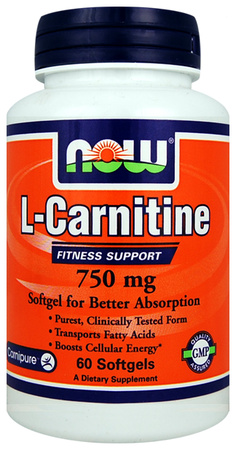
Getting to know L-Carnitine...your weight loss buddy

Carnitine, often referred to as L-Carnitine, is an essential element that breaks down fat within the body and helps to transport fat through the body to be converted into energy.  Proper levels of carnitine in the body will help to promote overall physical fitness, as any fat you eat will be efficiently used to fuel the functions of the body.  L-carnitine is widely used as a natural method for weight loss since it enables the burning of fat at much higher speeds.  It can also decrease your food cravings, increase your energy during exercise, and increase your metabolic rate.  In the same way, carnitine is used to promote heart health and in treating and managing angina, arrhythmias and other heart ailments.  It is also used by athletes to promote further sports endurance. And word on the street is it can also support male fertility…way to go Carnitine!

For the folks that need a scientific explanation… l-carnitine is an essential amino acid. Amino acids are used in every cell of your body and are used to build the proteins you need to survive.  L-carnitine transports long-chain fatty acids across the mitochondrial (mitochondria are known as the powerhouses of the cell) membrane to be metabolized. L-carnitine aids in the release of stored body fat, triglycerides, into the bloodstream for energy.

L-carnitine is available in the following food sources: red meat, diary products, avocado, and tempeh.  With a well-balanced diet, you should have sufficient amounts of l-carnitine in your body.  But then again how many of us are eating well-balanced diets? That said, adding about 500 - 2000 mg of L-carnitine to your daily regimen will ensure you have a full army of fat transporters to get your body right for the summer…or for the men, help get your little soldiers in order.

How to Take L-Carnitine. Start by taking two 500 mg capsules of l-carnitine before or with breakfast. After one week the dosage can be increased, if needed, to two 500 mg capsules before breakfast and lunch. Increase your dose of l-carnitine gradually until you see a difference in weight loss, energy and overall well-being. Taking l-carnitine after 4:00 pm may make it harder to fall asleep at night, so try not to take carnitine then. This is the only side effect of taking too much carnitine is too much energy.  When possible, use l-carnitine in the carnitine tartrate form, which is the purest available. You can find l-carnitine at your local vitamin store...make sure to get L-Carnitine and not Acetyl l-carnitine (different supplement)

Take good care of yourself.